
DIAMONDBACK
Vermont heritage. A new technical era.
An American fly rod brand built around a focused portfolio, clearly defined applications and development that connects the blank, components and the complete fishing setup.
Discover the history and development of DiamondBack ↓
DiamondBack may appear to be a new or lesser-known name on the European market. In reality, it is a revived American brand with roots in Vermont, its own rod-building heritage and modern product development led by people with extensive experience in rods, fly lines and contemporary fly-fishing systems.
DiamondBack – a historic name, not an anonymous brand
The history of the DiamondBack Fly Rod Company dates back to 1983 and the town of Stowe, Vermont. During its original era, the company established a reputation for hand-built fly rods that were also recognisable by the distinctive woven appearance of their carbon-fibre blank surfaces.
Earlier ranges included the Backwater, Carbonite, Classic Trout, Diamondglass and Golden Shadow models. DiamondBack therefore does not enter today’s market as a newly created name for catalogue production, but as a revived brand with its own American heritage.
Vermont roots since 1983
The brand originated in Stowe, Vermont, where the original DiamondBack rods were produced and their distinctive design identity was formed.
A distinctive blank character
Historic models were recognisable by their woven carbon surface and construction details that set them apart from conventional production.
The return of product development
In 2021, the company headquarters and product development returned to Vermont, beginning the current chapter of DiamondBack.
From the original Vermont rods to a new era
DiamondBack’s earlier history passed through several ownership and manufacturing periods. During the 1990s, the brand was closely associated with Barton Merle-Smith, described by contemporary and collector sources as an influential rod designer and company representative.
According to available secondary sources, DiamondBack was acquired by Cortland in 1999. The historic Vermont production facility was later closed and manufacturing moved away from the original factory. A further revival followed approximately between 2014 and 2017 under former Cortland product manager Nate Dablock.
The current era began in 2021 with the return of the company headquarters and product development to Vermont. DiamondBack is now based in Brattleboro, combining its historic name with a new generation of technically focused fly rods.

Historic DiamondBack Classic Trout and Golden Shadow fly rods. Photo: Cycleguy / The Fly Fishing Forum.
Joe Goodspeed and today’s DiamondBack
The most important design figure behind the modern DiamondBack brand is Joe Goodspeed. His experience was not gained solely through blank design. From 2009 to 2014, he worked in fly-line manufacturing at Cortland, and from 2015 to 2021 he was involved in rod development for Thomas & Thomas.
His name is particularly associated with the Contact and Contact II nymphing ranges, which are widely respected rods for modern European nymphing. Goodspeed has also worked on rods for large predators, inshore fishing and offshore fly fishing, and since 2018 has designed his own fly patterns for Fulling Mill.
At DiamondBack, he is the principal design and strategic figure. His approach is based on the principle that a rod does not function in isolation. The blank, fly line, leader, handle, reel seat, guides and their placement must work together as one functional system.

Development that neither begins nor ends with the blank
DiamondBack emphasises three fundamental blank variables in its design strategy: material composition, the behaviour of the material during production and wall thickness. However, the performance and character of a rod are not determined by carbon fibre alone.
The component strategy is equally important – the shape and material of the handle, the reel seat, the guide type, their size and their precise placement. Individual elements are therefore not assessed separately, but according to how the rod performs in a particular fishing application.
Key elements considered in DiamondBack rod design
- the material composition and wall thickness of the blank
- recovery speed after casting and during nymph presentation
- the transfer of power between the tip and lower section of the rod
- the shape, material and length of the handle
- reel position and the resulting balance of the complete setup
- guide type, size and placement
- real performance on the water, not only laboratory specifications
Generation IV Nymph – technology adapted to its application
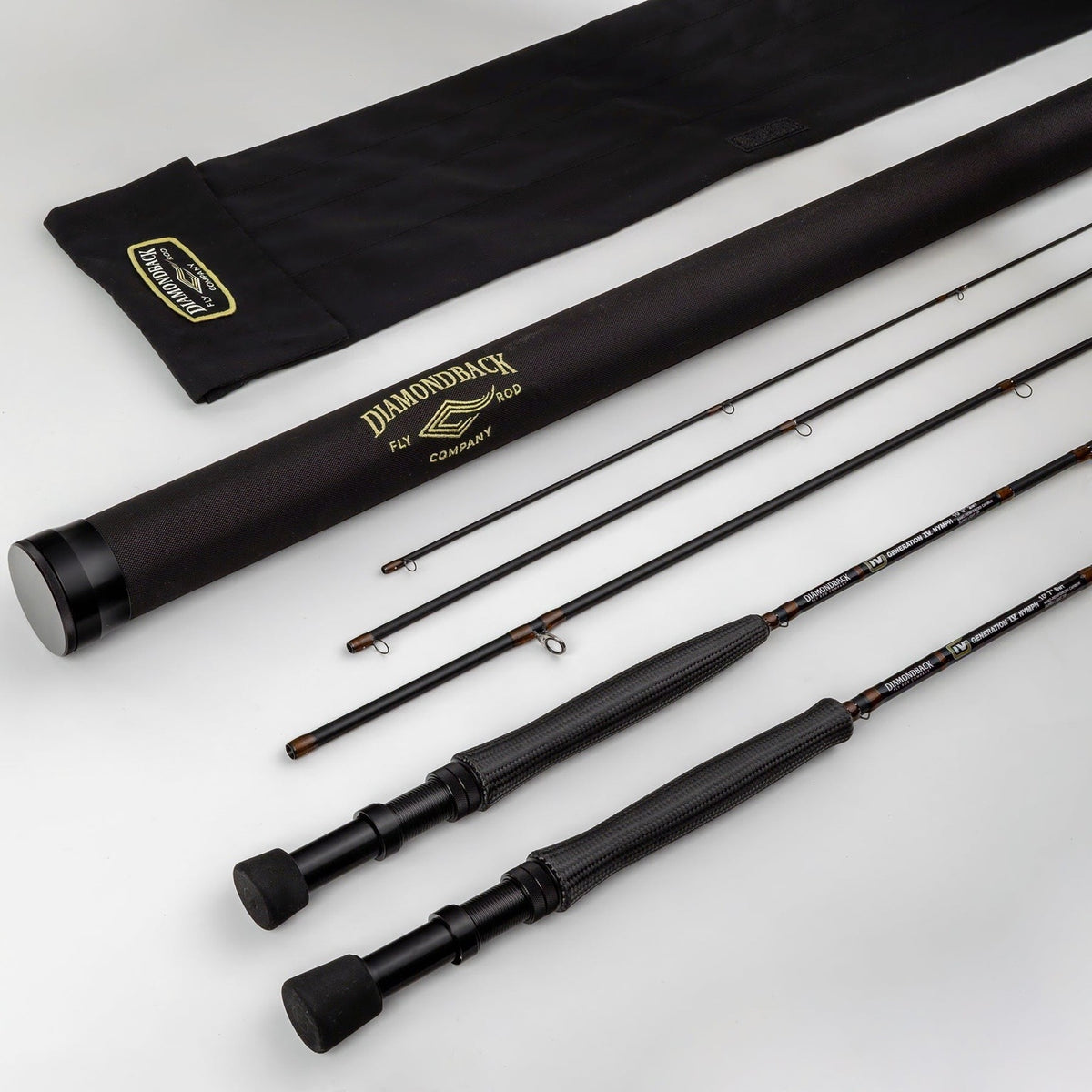
The Generation IV Nymph series demonstrates how DiamondBack approaches materials and individual rod configurations. The company highlights nano-reinforced carbon and nano-resin blank technology, while each model is tuned according to its length, power and the expected demands placed on it while fishing.
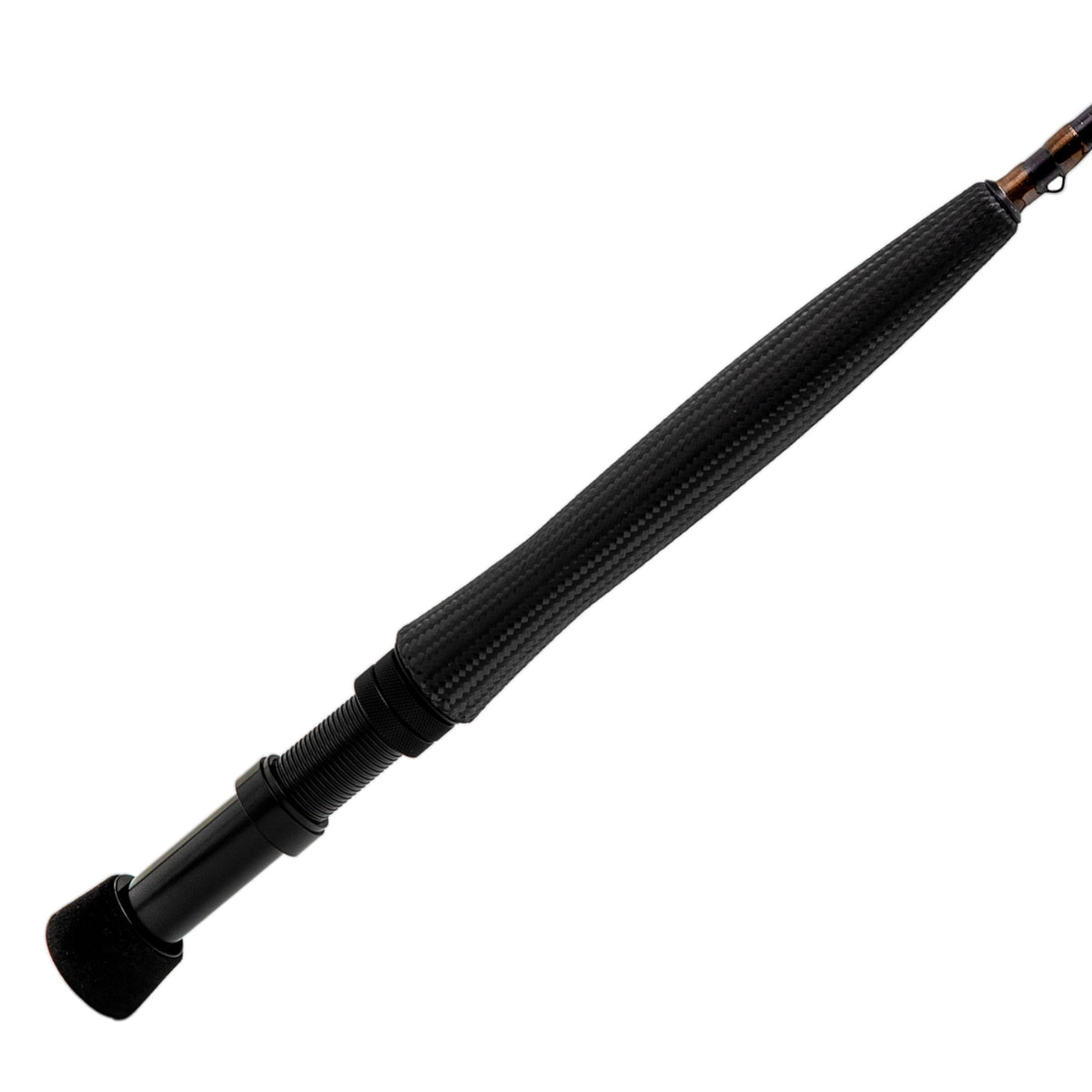
The different handle designs also demonstrate that components are not merely visual details. The material and shape of the grip influence contact with the blank, comfort, weight and the final balance of the rod.


A focused portfolio with clearly defined applications
The modern DiamondBack brand does not attempt to cover every price category and every form of fly fishing with dozens of rod ranges. Its portfolio is intentionally focused, and each series has a clearly defined purpose.
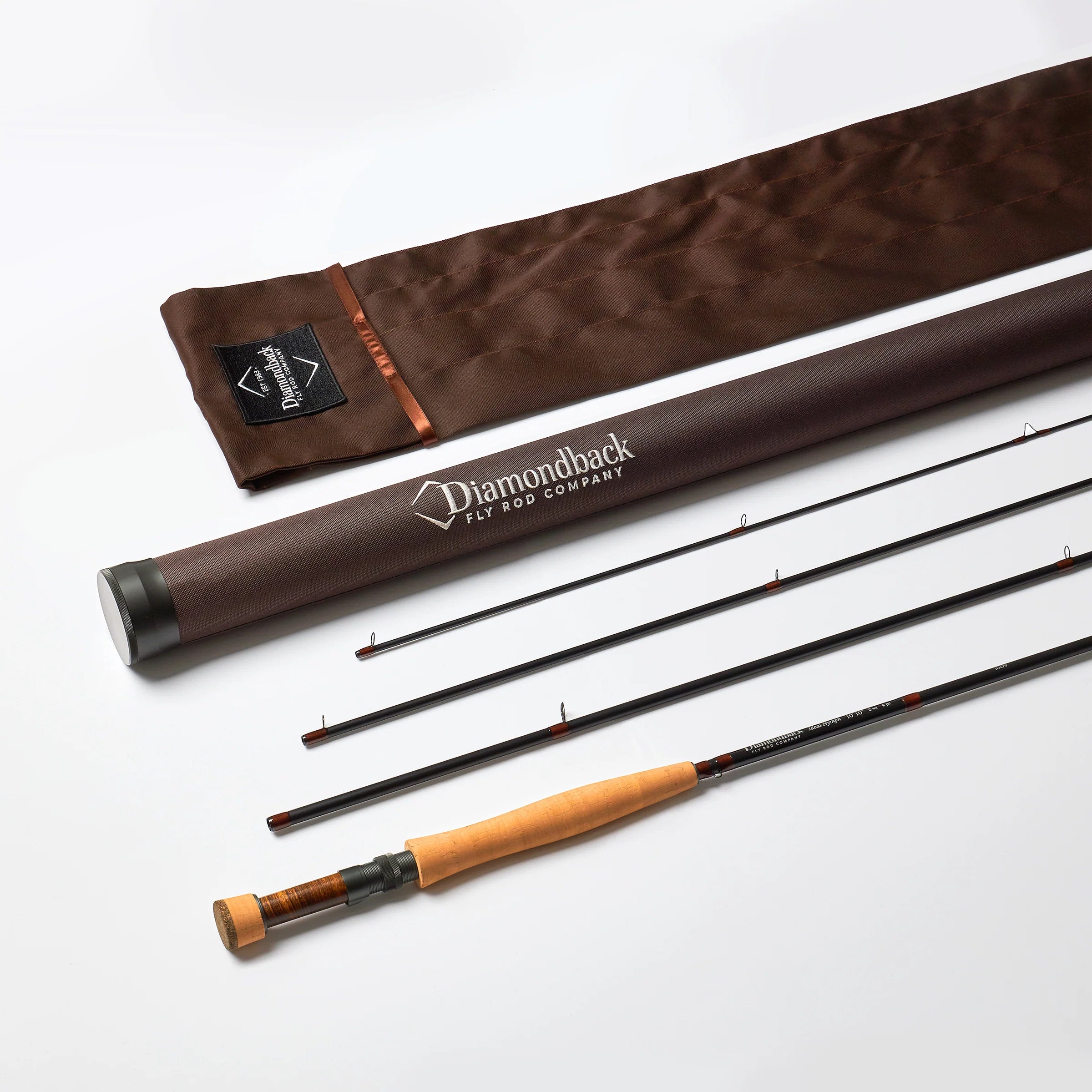
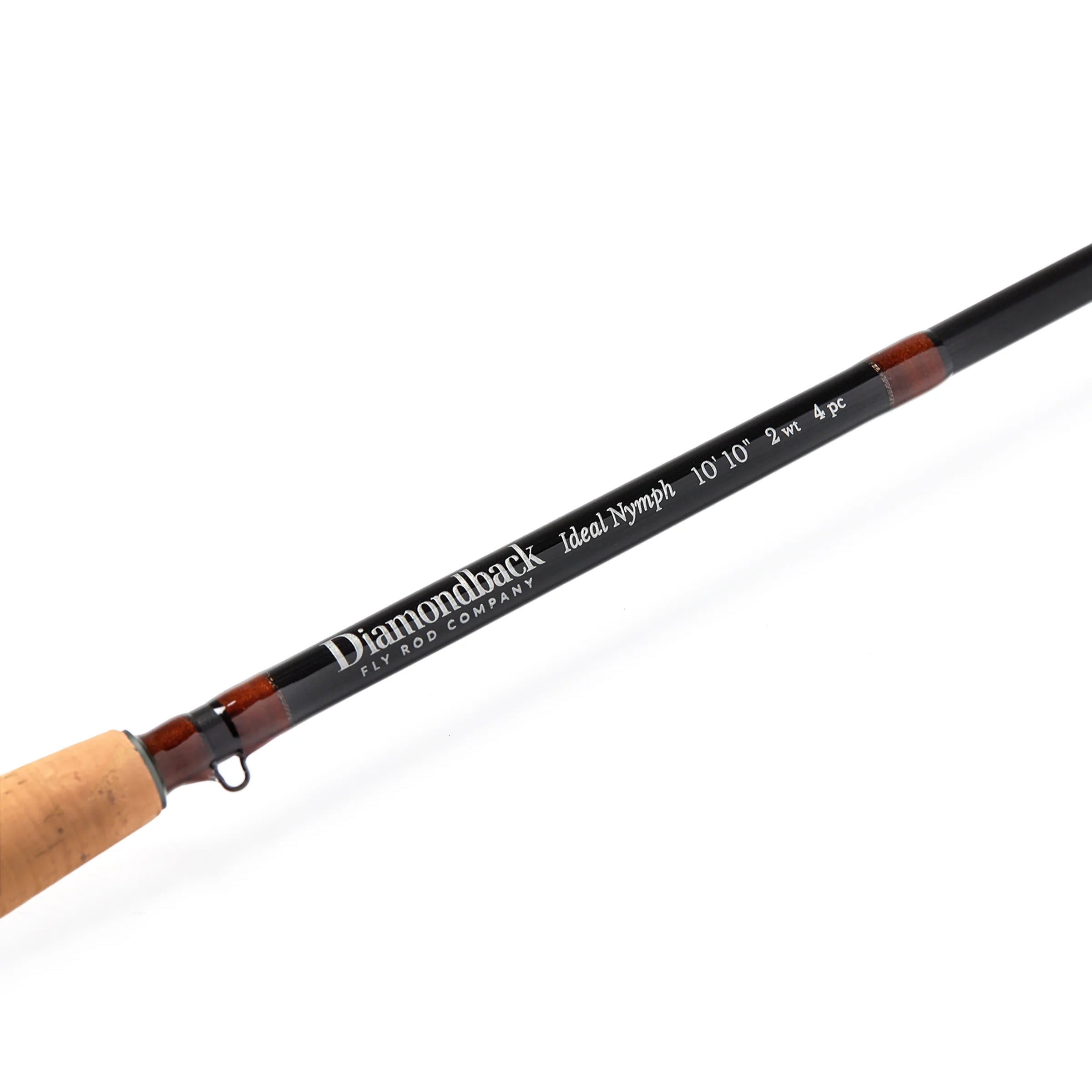
Ideal Nymph
Specialised nymphing rods built around a sensitive upper section, a more powerful lower section, careful balance and purpose-designed guide placement.
Generation IV Nymph
A newer nymphing platform using nano-reinforced carbon and solutions tailored to different techniques, waters and fish sizes.
Aeroflex
A more versatile range for anglers seeking a modern carbon rod with a dynamic flex profile and additional power in the lower section.
Tactical Long
Longer, technically oriented rods designed for line control, presentation at greater distances and specific fishing conditions.
Universal Predator
More powerful rods for large flies and predatory fish, combining carbon materials of different modulus levels with S-Glass reinforcement.
Reels, blanks and replacement parts
The portfolio is complemented by reels, separate blanks and replacement tips that support the long-term use of technically specialised rods.
A rod is more than a blank with a handle
The character of a complete setup emerges only when the material, action, components, guides, reel and intended application work together as one system.
Developed in Vermont, manufactured in South Korea
Historic DiamondBack rods were produced in Vermont. Today, the company retains its headquarters, product direction and development in the United States, while current rods are manufactured in South Korea according to available independent sources.
DiamondBack therefore cannot accurately be described as a present-day handcrafted Vermont rod manufacturer. It is more precisely an American design brand with technical development in Vermont and modern Asian manufacturing.
DiamondBack’s position among fly-fishing brands
DiamondBack is not one of the largest mass-market manufacturers such as Orvis, Sage or G. Loomis. Its position is closer to that of a specialised brand sought out by anglers interested in a particular technique and a clearly defined rod character.
Independent specialist reviews compare DiamondBack nymphing models with rods from Thomas & Thomas, Hardy and Echo. They particularly highlight balance, action, guide placement and the ratio of technical performance to price. Community experience also indicates that individual models are not interchangeable and should be selected according to the water, setup and fishing method.
Why we added DiamondBack to the Thymallus range
We did not add DiamondBack to our range simply because it is a widely recognised logo. What interested us was the combination of a historic name, modern technical development and rods in which individual design decisions have a clear practical purpose.
The nymphing models in particular demonstrate that the quality of a rod is not determined solely by the type of carbon fibre or its AFTMA rating. The blank profile, recovery, transfer of power, reel position, guide placement and the way the complete setup works with a long leader and fine tippet are equally important.
We therefore do not view DiamondBack as a replacement for another brand. It is a distinct choice for anglers seeking a technically considered rod and making their selection according to real fishing applications rather than name recognition alone.
We will be happy to advise you according to the type of water, your fishing setup, the size of fish and the way you intend to use the rod.