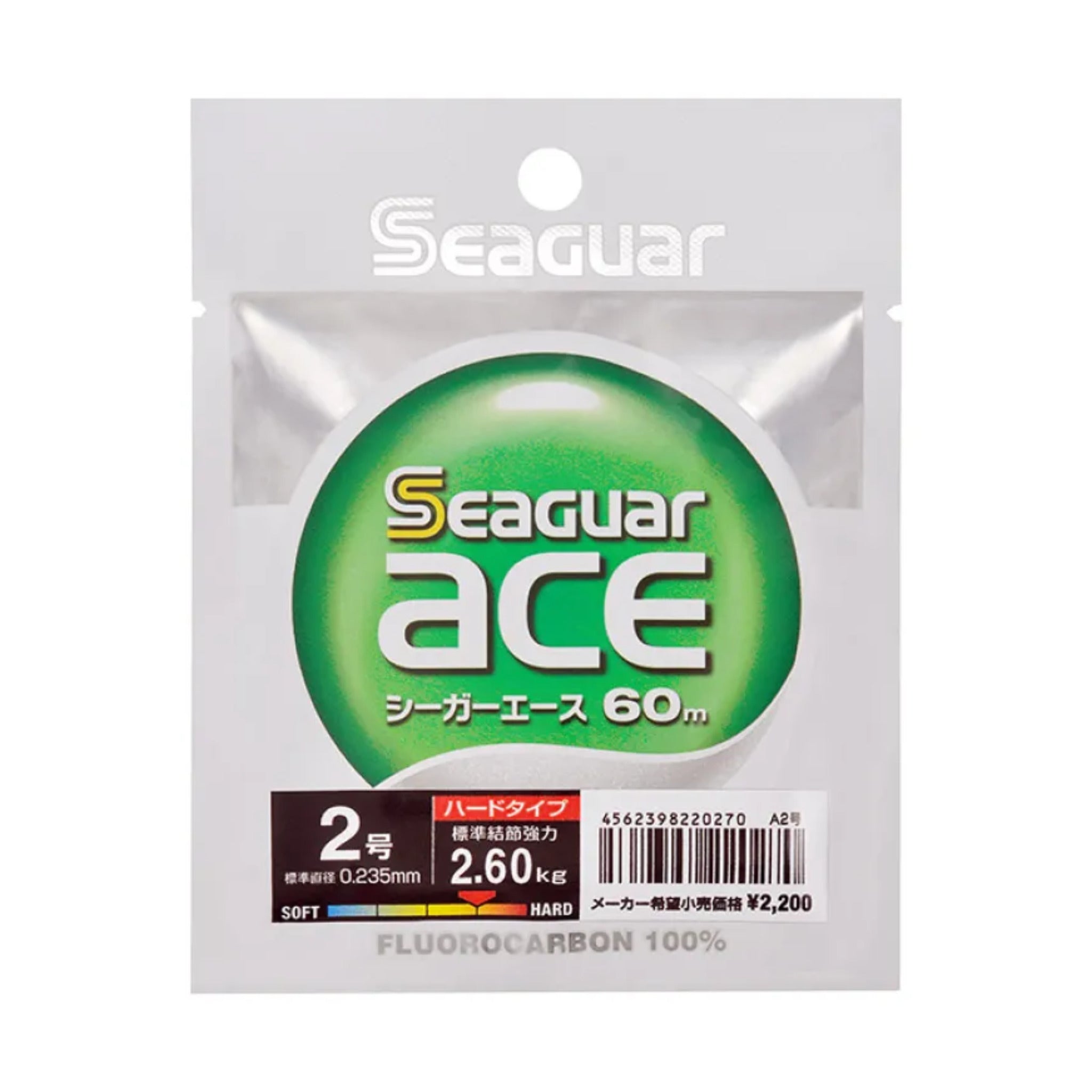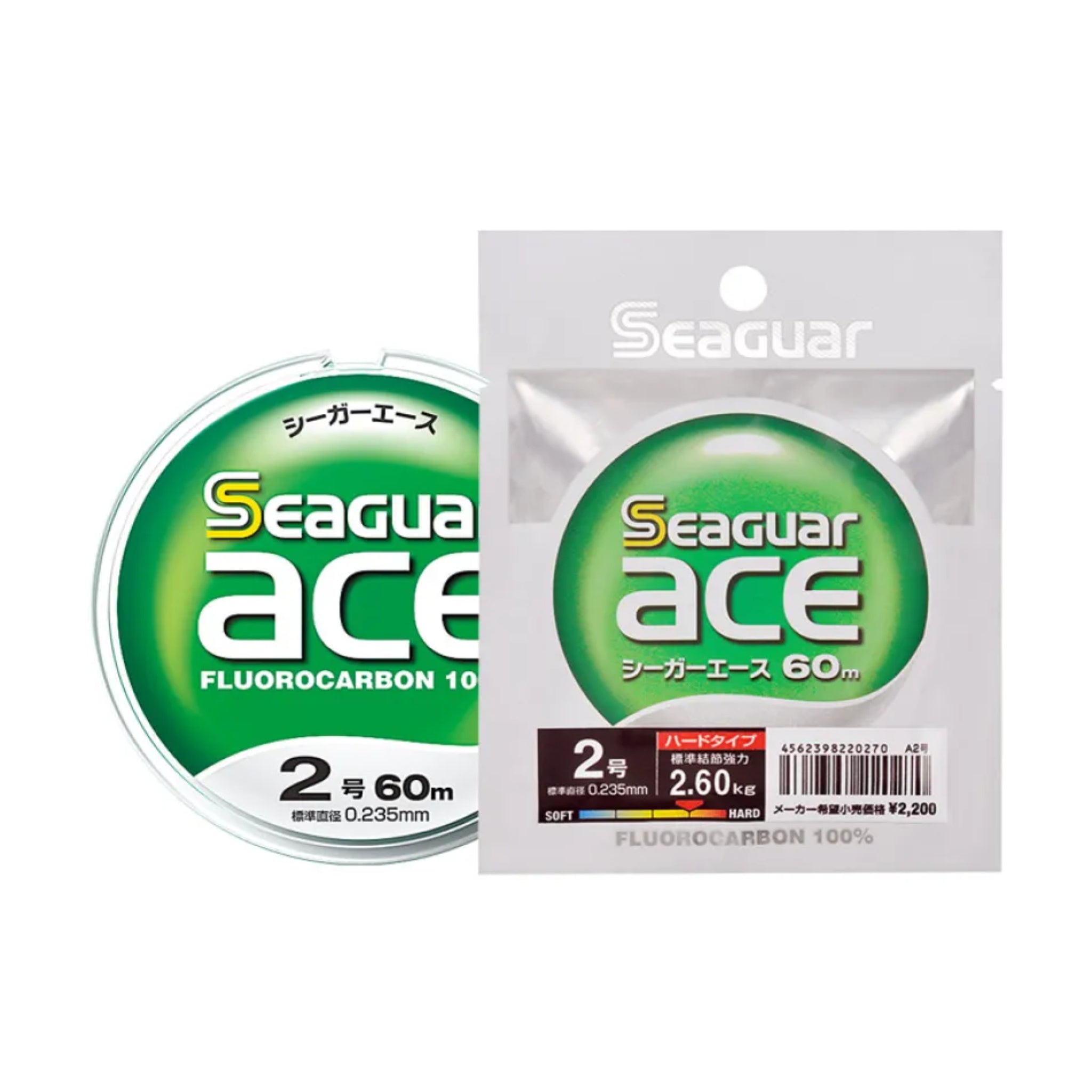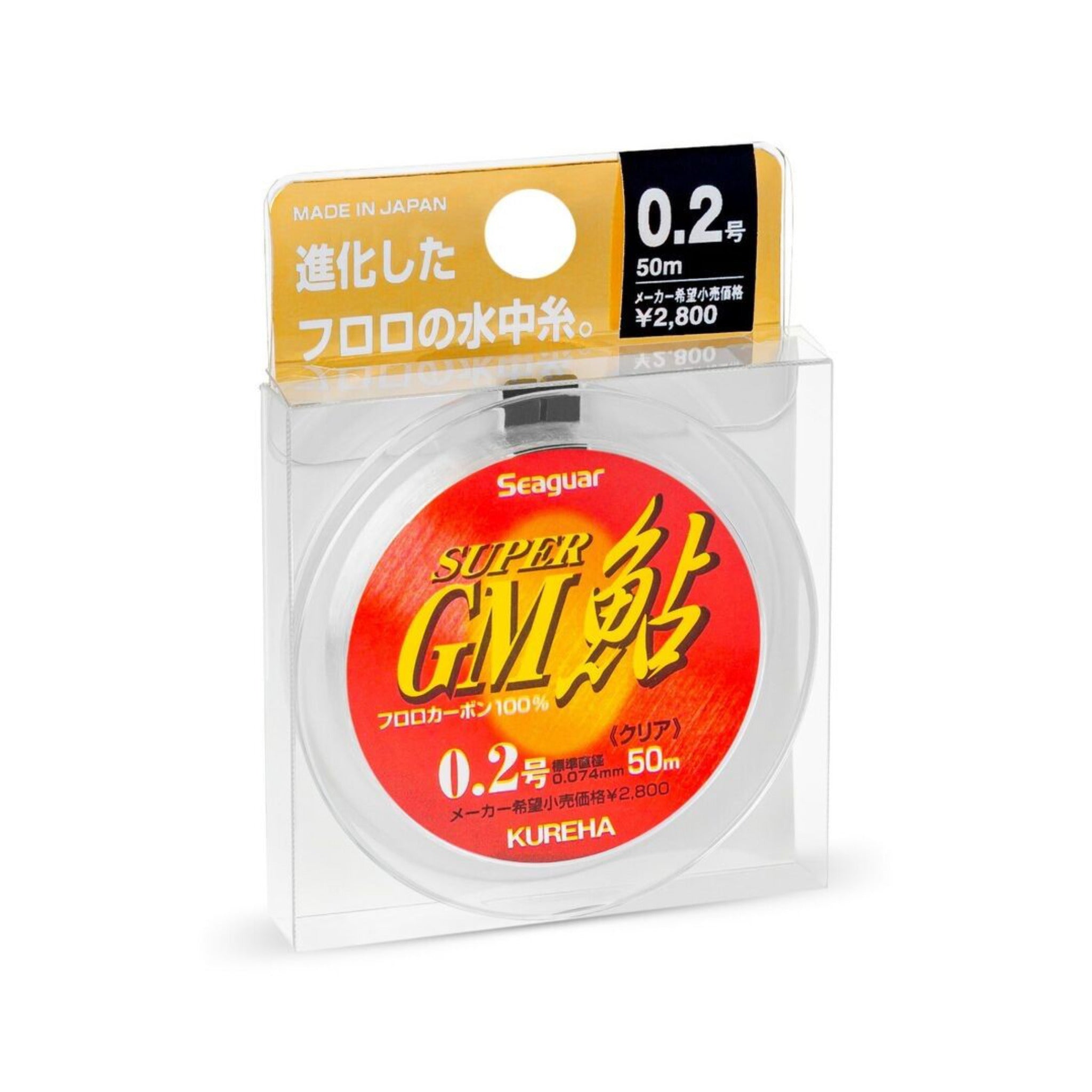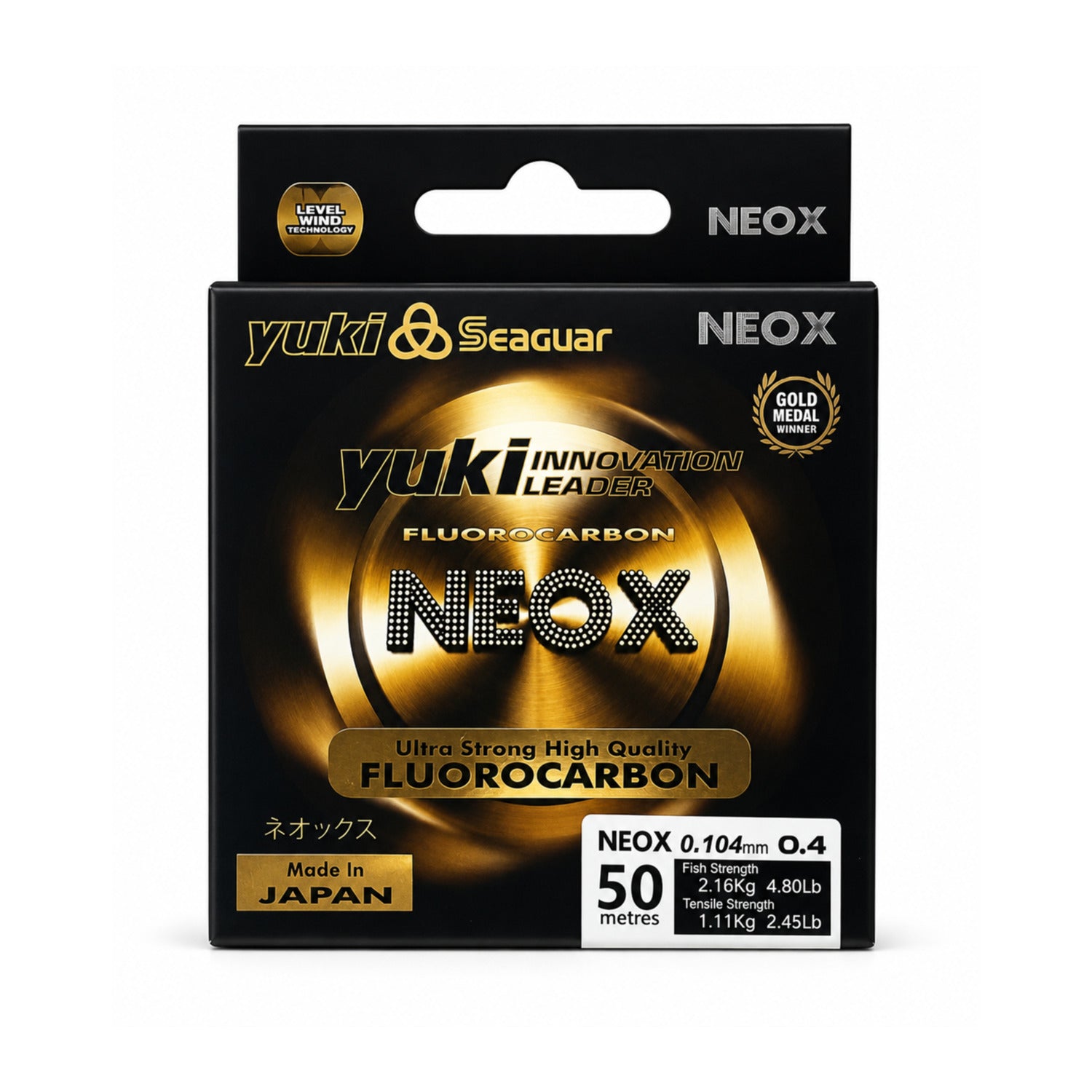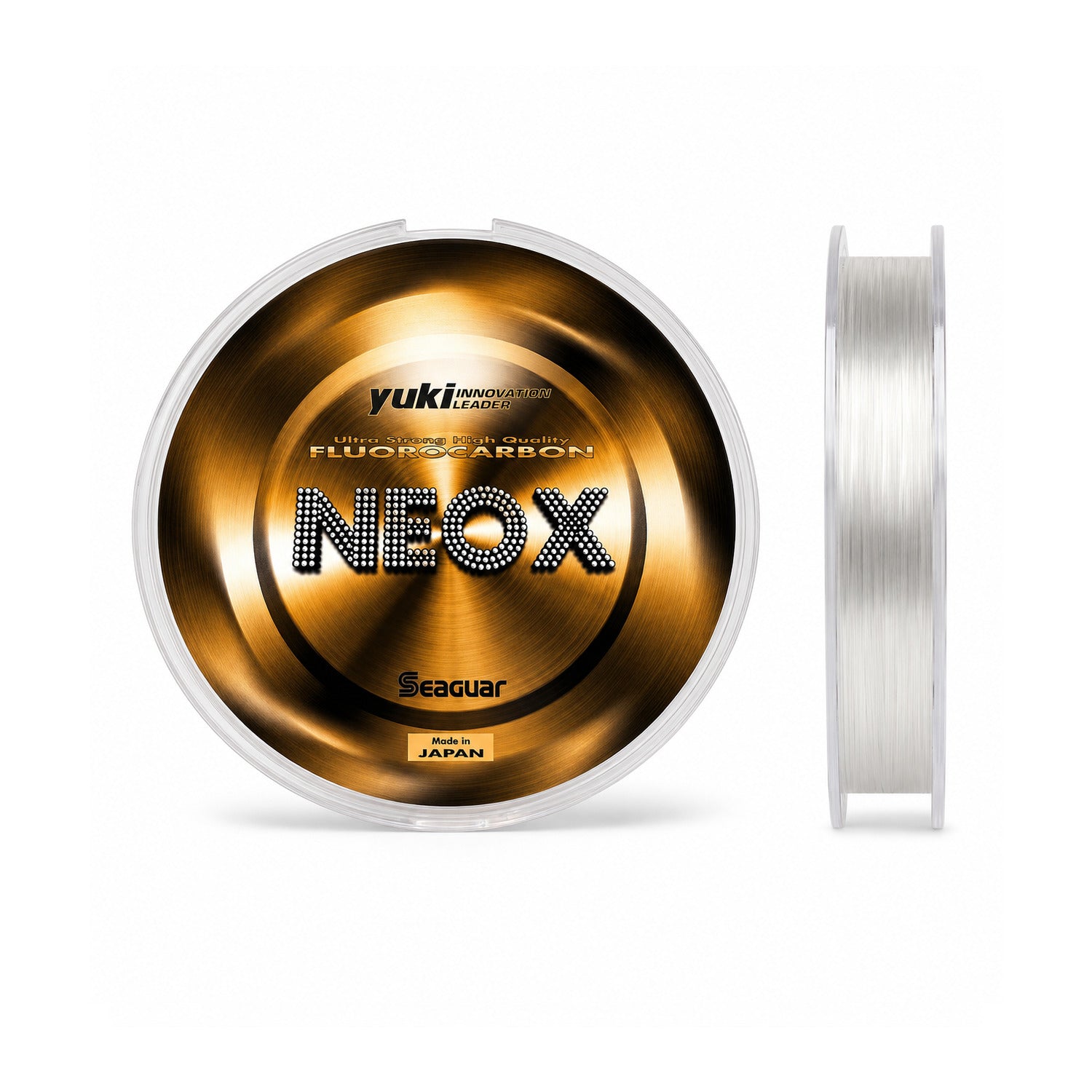

Seaguar
In 1971, we created the world’s first fluorocarbon fishing line.
From proprietary fluorocarbon resin to the finished line – the entire manufacturing process under one control.
Discover the story and technologies of Seaguar ↓
Seaguar does not merely stand at the forefront of fluorocarbon fishing line development. It stands at its very beginning. Since 1971, the brand has combined proprietary fluorocarbon resin development, complete manufacturing control and the precise tailoring of individual lines to specific fishing applications.
The invention that changed fishing line
In 1971, the Tokyo-based company Kureha created Seaguar – the world’s first fishing line and leader material made from fluorocarbon.
Since then, Seaguar has continued developing materials designed to bring anglers genuine advantages on the water. More than five decades of experience, however, are not the only reason why the brand holds such a distinctive position in the world of fishing line.
From proprietary resin to finished line
Seaguar is the only fluorocarbon company that manufactures its own fluorocarbon resins and controls the production process from beginning to end.
This level of control makes it possible to develop different material formulations for individual lines and leader materials. Seaguar products are therefore not simply different diameters of the same fluorocarbon. Each one can be engineered around a different balance of strength, suppleness, abrasion resistance, stretch, sensitivity and knot strength.
What makes Seaguar different
- created the world’s first fluorocarbon fishing line in 1971
- manufactures proprietary fluorocarbon resins for lines and leader materials
- controls the manufacturing process from raw material to finished product
- develops different formulations for specific properties and applications
- is one of the pioneers of multi-resin fluorocarbon construction
Are all 100% fluorocarbons the same?
No. The term “100% fluorocarbon” identifies the basic material used, but it does not by itself determine the quality or practical performance of the finished line.
Differences can arise from the quality and formulation of the resin, the extrusion process, diameter precision and overall manufacturing control. Two products labelled as 100% fluorocarbon can therefore differ in stiffness, memory, knot strength, stretch and resistance to mechanical damage.
Proprietary resin
Seaguar develops its own fluorocarbon resins and can tailor their properties to the requirements of individual products.
Precision extrusion
The final result depends not only on the raw material, but also on how the molten resin is extruded and formed into a precise diameter.
Manufacturing control
Control of the entire process helps maintain consistent line properties throughout its full length.
Is fluorocarbon completely invisible underwater?
It is not completely invisible. Its advantage is that its refractive index is closer to that of water than nylon. Light is therefore bent less dramatically when passing between water and fluorocarbon, making the material more difficult for fish to detect below the surface.
Seaguar states that the refractive index of water is approximately 1.33, fluorocarbon approximately 1.42 and nylon approximately 1.53 to 1.62. Fluorocarbon is therefore optically closer to water than conventional nylon monofilament.
Can one 100% fluorocarbon be less visible than another?
According to Seaguar, the refractive index of pure 100% fluorocarbon cannot be altered. It is an inherent property of the material and remains constant.
A slight colour tint visible on the spool of some fluorocarbons does not therefore automatically indicate damage or poorer underwater performance. It may result from the resin formulation and manufacturing process.
Does scratched fluorocarbon glow underwater?
No. A scratch or minor surface damage does not change the refractive index of the fluorocarbon itself, so the line does not suddenly become brightly visible underwater.
Damage can, however, reduce its mechanical strength. Leader material should therefore be checked regularly by running it between the fingers, particularly after contact with rocks, shells, roots, sharp edges or fish teeth. Its optical properties may remain unchanged, while the damaged area can still fail under load.
Fluorocarbon or fluorocarbon-coated nylon?
These are not the same materials. With 100% fluorocarbon, the entire cross-section of the line is made from fluorocarbon resin. Fluorocarbon-coated nylon has a nylon core with only an outer fluorocarbon coating.
The different construction produces different optical, mechanical and practical properties. The term “fluorocarbon coated” should therefore not be treated as equivalent to “100% fluorocarbon”.
Why is fluorocarbon more expensive than nylon?
Nylon is a less expensive raw material and is easier to process. Fluorocarbon resins and their extrusion require a more demanding manufacturing process.
With Seaguar, the price also reflects the development of proprietary resins, control of the production process and, in selected products, the use of multi-resin construction. A higher price may therefore represent not only a difference in brand name, but also a difference in material and manufacturing technology.
What does Double Structure mean?
Double Structure is a Seaguar technology in which two different 100% fluorocarbon resins are combined during extrusion into one integral material.
Tensile strength
A harder inner resin contributes to the fluorocarbon’s high linear tensile strength.
Knot strength
A softer outer resin creates a more supple surface and supports the strength of a correctly tied knot.
No separable layers
Both resins are extruded as one integral piece. It is not a surface coating or a set of layers that can separate from one another.
Double Structure is not a general description of every Seaguar fluorocarbon. It is a specific technology used in selected products. Construction and performance must therefore always be assessed according to the individual model.
Is knot strength a weakness of fluorocarbon?
With early fluorocarbon materials, knot strength was one of the most challenging properties. Tightening a knot creates high pressure, friction and localised stress, which can weaken the material.
Seaguar therefore pays particular attention to resin formulation and the construction of selected products in order to achieve an effective balance between linear strength and knot strength.
Does fluorocarbon absorb water?
Fluorocarbon absorbs only a very small amount of water. Its properties therefore change less during prolonged submersion than those of materials that absorb water more readily.
Low water absorption is also important in cold conditions. According to Seaguar, fluorocarbon remains suitable for use at low temperatures without absorbed water significantly changing its behaviour.
Is fluorocarbon affected by sunlight and UV radiation?
Resistance to UV radiation is one of the natural properties of 100% fluorocarbon. The material does not need to be stored in complete darkness simply because of ordinary daylight or fluorescent lighting.
Sensible storage still matters. The spool should be protected from mechanical damage, dirt and prolonged exposure to extreme temperatures.
Why does fluorocarbon sink faster than nylon?
Fluorocarbon has a higher density than nylon and therefore sinks more readily. In subsurface techniques, this can help take the leader and fly below the surface and reduce their tendency to remain in the surface film.
This also means that fluorocarbon is not automatically the best choice for every technique. For dry-fly fishing, nylon leaders are often preferred because they are lighter, more supple and remain closer to the surface.
Does fluorocarbon have zero stretch?
No. Fluorocarbon stretches under load, although generally less than nylon. Lower stretch can provide more direct contact, improved bite transmission and greater sensitivity.
The exact amount of stretch depends on the formulation and construction of the product. A fluorocarbon main line may be engineered differently from a short leader or tippet material, which must withstand high loads over a considerably shorter section.
Why does Seaguar offer several types of fluorocarbon?
There is no single combination of properties that is ideal for every fishing situation. A very hard material may offer excellent abrasion resistance, but may not be as supple. A softer fluorocarbon may be easier to knot and handle, while being designed around a different set of priorities.
Seaguar therefore engineers individual ranges around specific performance characteristics. Selection should consider not only the stated strength, but also diameter, stiffness, knot strength, abrasion resistance, memory and the intended fishing technique.
Why you will find Seaguar at Thymallus
We did not add Seaguar to our range simply because it is a recognised Japanese name. What matters is its role in the creation of fluorocarbon fishing line, its proprietary resin development and its control of the manufacturing process from raw material to finished product.
For anglers, this means being able to choose between materials whose properties are not based only on marketing language. Individual ranges use different constructions and are designed for different demands on the water.
At Thymallus, we therefore aim to provide specific diameters, strength ratings, technologies and recommended uses for every Seaguar product, so that you can select the right fluorocarbon according to your fishing method and conditions – not merely according to the name on the package.
We will be happy to advise you according to your fishing method, fly size, water conditions and the size of fish you expect to encounter.