

AQUILA
helps you see more
beneath the surface.
Polarized sunglasses developed by anglers to reduce glare, protect your eyes and make the water easier to read.
Discover the technology and story behind AQUILA ↓
You are standing beside the water and know the fish is close. Yet the surface reflects the sky, surrounding trees and sunlight more strongly than it reveals what is happening beneath it.
AQUILA – a clearer view of the water
This is the moment when a quality pair of polarized sunglasses changes from a simple accessory into one of the most important pieces of fishing equipment.
AQUILA is a brand of polarized sunglasses developed around the practical needs of anglers. It did not begin as a fashion collection that was later given a fishing label. Its starting point was the water itself, long days beside rivers and the demands of people who need to read the surface, follow the movement of fish and protect their eyes from intense sunlight.
The brand was created in 2021 by experienced anglers and is backed by Rudi Heger GmbH, a company well known through brands and products connected with fly fishing and angling.
The result is a collection of sunglasses in which frame shape, side coverage, lens colour and polarization are assessed primarily according to how they perform beside the water.
Why anglers use polarized sunglasses
- they reduce distracting glare reflected from the water
- they make it easier to see fish, the bottom, rocks and submerged obstacles
- they improve visual comfort during long days in bright sunlight
- they help the eyes distinguish contrast and detail in demanding light conditions
- they provide protection from ultraviolet radiation
- they also shield the eyes from wind, insects and stray flies or hooks
Why the surface hides detail without polarization
Sunlight travels in many directions, and when it reaches a smooth water surface, part of it is reflected towards the eyes. This strong reflection creates a bright, glossy layer that obscures the view beneath the surface.
Standard tinted sunglasses reduce the overall amount of light, but they do not fundamentally change the character of the reflected glare.
A polarizing filter is designed to block a significant part of this distracting reflected light. The surface appears calmer and less dazzling, allowing the angler to detect the outline of a fish, movement near the bottom, a current seam, a submerged rock or a change in depth more easily.

Read the water more clearly
Changes in depth, currents, rocks, vegetation and submerged obstacles can become easier to identify. This helps both when searching for fish and when moving safely through the water.
Spot fish sooner
Less glare gives you a better chance of noticing subtle movement, a shadow or the outline of a fish before you approach too closely and disturb it.
Reduce visual fatigue
Constantly squinting against reflected light becomes tiring over a full day on the water. Quality lenses help maintain more comfortable vision even under intense sunlight.
Seeing the fish is often the first step towards catching it
Polarization cannot reveal a fish that is not there. It can, however, remove part of the visual barrier between the angler and the world beneath the surface.
AQUILA multi-layer lens construction
A polarized lens is not simply a tinted transparent panel. Its individual functional layers form a complete system designed to reduce glare, filter harmful ultraviolet radiation and protect the central polarizing membrane.
AQUILA uses a seven-layer construction. At its core is a polarizing filter supported by protective and filtering layers.
- a central polarizing membrane that reduces distracting glare
- UV400 filters protecting against UVA and UVB radiation
- protective layers that improve lens durability
- lens colours adapted to different light conditions

Optical performance, protection and durability
The seven-layer construction combines polarization, ultraviolet protection, mechanical durability and the comfort required for regular use beside the water.
UV400 – protection you cannot see
Reducing glare and protecting the eyes from ultraviolet radiation are not the same thing. Polarization primarily deals with reflected glare, while a UV filter protects the eyes from the invisible part of sunlight.
The UV400 designation means that the lenses filter ultraviolet radiation up to a wavelength of 400 nanometres, covering both the UVA and UVB ranges.
This protection is especially important when fishing because the eyes are exposed not only to direct sunlight but also to light reflected from a large surface area of water.
Three frames for different face shapes and uses
Even the best lens cannot perform properly if the frame does not fit. Sunglasses that are too loose will move during activity, an unsuitable shape may cause pressure, and insufficient side coverage allows distracting light to enter around the lenses.
AQUILA therefore offers three main frame families: Guide, Sonar and Ghillie.

AQUILA Guide
A more pronounced sport-style frame designed for good eye coverage and stability during active movement. Suitable for anglers who want to reduce light entering from the sides and prefer a secure fit.
AQUILA Sonar
A versatile frame suitable for fishing as well as everyday wear. It offers a balanced option for anyone looking for practical sporting performance without an unnecessarily bulky appearance.
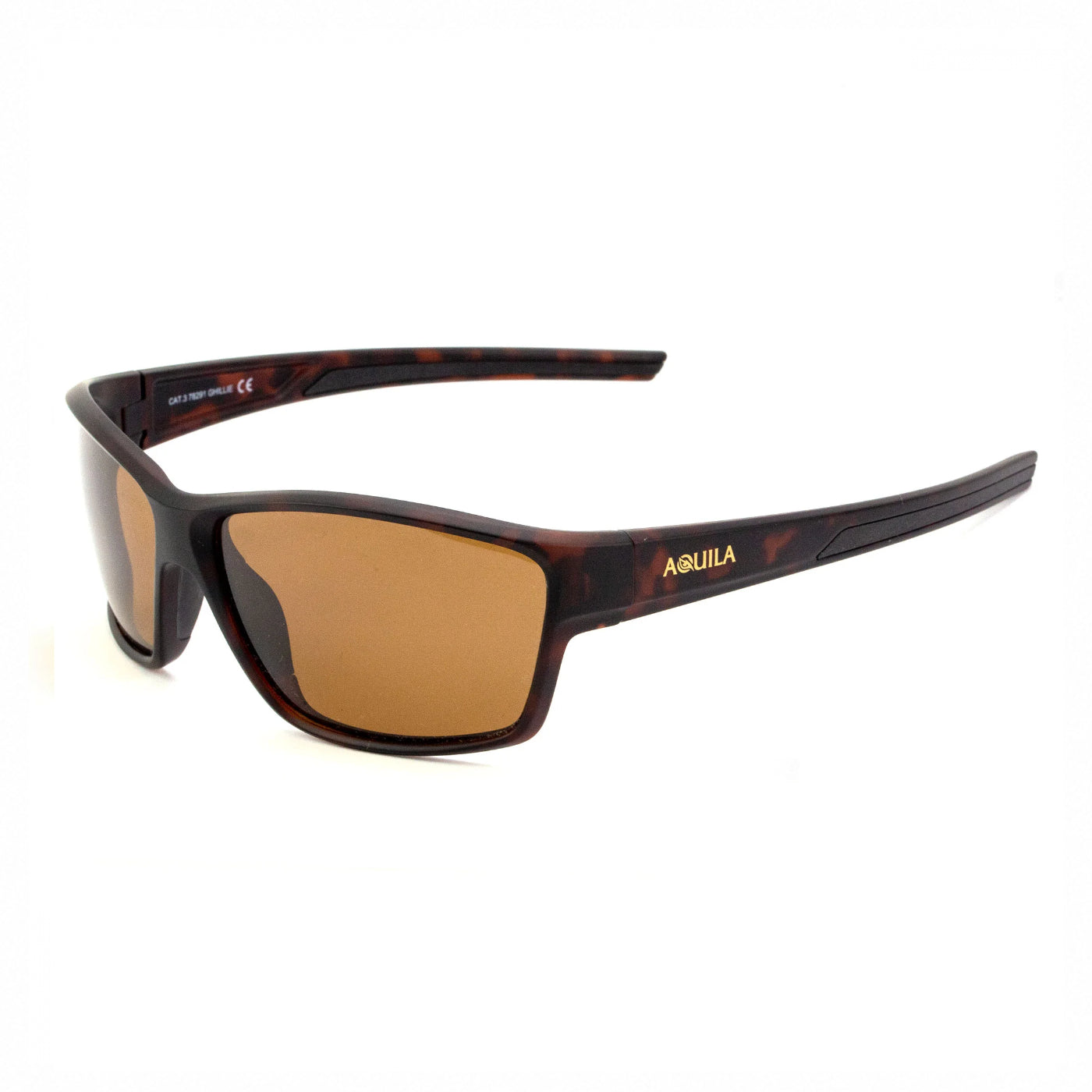
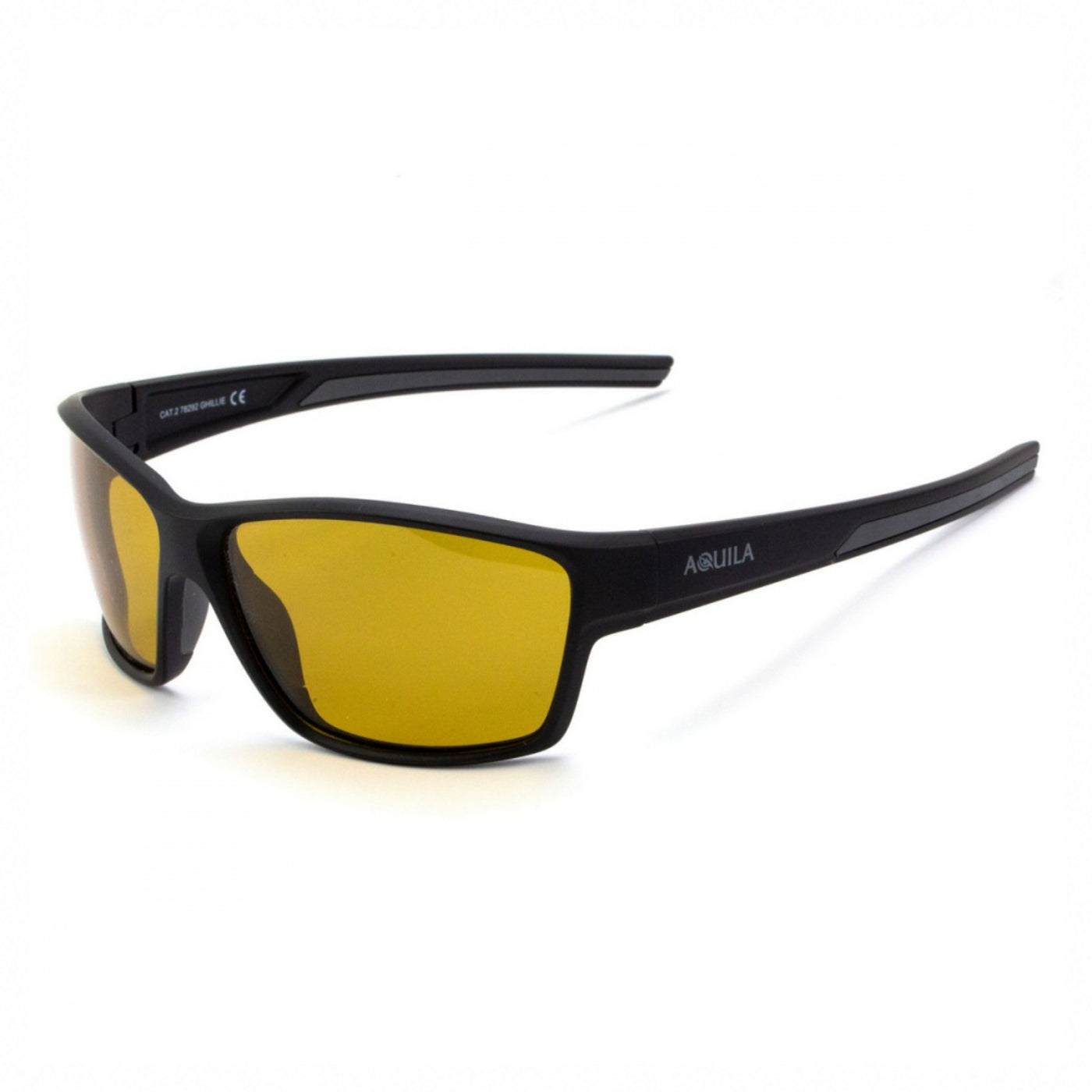
AQUILA Ghillie
A distinct alternative for anglers who prefer a different frame profile or fit. Comfort and effective coverage should always matter more than appearance in a photograph.
How to choose the right lens colour
Lens colour is not simply an aesthetic choice. It affects contrast, colour perception and the amount of light reaching the eyes.
One colour will therefore not be ideal for every river, every season and every type of weather.
Grey lenses
Grey lenses preserve natural colour perception and are especially suitable for bright, intense sunlight. They are a good choice for open water, coastal fishing and clear days with little cloud cover.
Brown or amber lenses
These increase contrast and make it easier to read uneven bottom structure and changing conditions. They are a highly versatile choice for rivers, lakes and variable light.
Yellow or lighter lenses
Lighter lenses allow more light through and can work well on overcast days, during early mornings, in the evening or on shaded woodland streams. They are usually less comfortable under strong midday sun.
Mirrored finishes
Mirrored coatings help reduce the amount of light reaching the lens and are practical in bright conditions. The final view is still determined mainly by the base lens colour beneath the mirrored layer.
Choosing lenses for the water and conditions
A small woodland stream with constantly changing shade and sunlight may require a different lens from a full day spent fishing on an open lake.
The needs of an angler sight-fishing in shallow, crystal-clear water also differ from those of someone fishing a deeper or slightly coloured river.
Consider the following when choosing
- whether you most often fish in direct sunlight or shade
- how quickly the light conditions change during the day
- whether you prefer natural colour perception or increased contrast
- your face shape and the side coverage provided by the frame
- stability while wading, casting and moving through uneven terrain
- comfort on the nose and behind the ears during several hours of wear
Polarized sunglasses as safety equipment
When wading, improved visibility beneath the surface helps you assess depth, bottom structure, slippery rocks and submerged obstacles.
Polarized sunglasses therefore offer more than an advantage when searching for fish. They can also support safer movement through the water.
The frame and lenses also form a physical barrier against wind, insects, branches and, most importantly, a hook or fly returning towards the face after a poor cast.
Caring for polarized sunglasses
Fine dirt, sand and dried water droplets can damage the lens surface when cleaned incorrectly. Rinse the sunglasses with clean water first and only then wipe them with a soft microfibre cloth.
Dry-wiping a dirty lens with a shirt or paper tissue can create fine scratches.
After use in saltwater, rinse them thoroughly with fresh water. When not being worn, keep them in a case and do not leave them on a vehicle dashboard for long periods, where high temperatures may damage both the frame and the surface layers of the lenses.
Why you will find AQUILA at Thymallus
AQUILA appealed to us because it focuses on a specific problem every angler understands: surface glare and the loss of detail beneath the water.
It does not offer a generic fashion accessory with a fishing name, but sunglasses built around the practical demands of use beside the water.
When choosing sunglasses, however, the correct frame is just as important as lens technology. We therefore recommend choosing by more than colour or appearance in a photograph.
A well-fitting pair should remain stable, avoid uncomfortable pressure and reduce distracting light entering from above and from the sides.
We will be happy to advise you according to your face shape, the type of water you fish, your fishing style and the light conditions in which you will use the sunglasses most often.